From “Poatan” to the Weigh-In Stage: The Pataxó Roots in Alex Pereira’s Identity
Before the opening bell, Alex Pereira communicates through the name “Poatan,” face paint, and an arrow-firing pose familiar to fight fans. Official accounts show that these are more than attention-grabbing visuals: they connect his public identity to Pataxó roots and to a promise that sporting success would be carried back to his people.
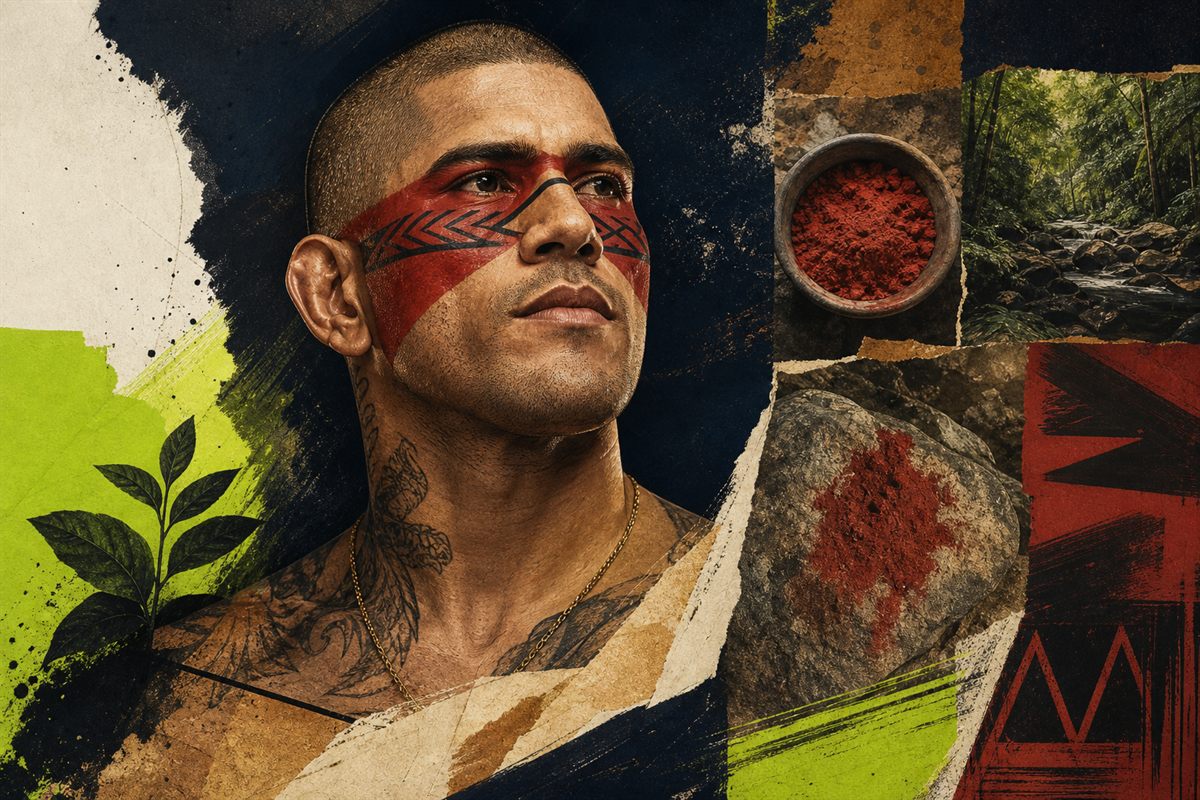
Poatan was not invented as a UFC marketing name
When GLORY announced Pereira’s signing in 2014, it described Poatan as an Indigenous name reflecting pride in his Brazilian Indigenous ancestry. Later GLORY material rendered the name in English as “Stone Hand,” while Pereira’s current UFC profile identifies its origin simply as an Indigenous name.
Care with language matters here. MuaySpot can report the meaning supplied by official sources without inventing an etymology or treating every Indigenous culture in Brazil as interchangeable. The name carries weight because Pereira told GLORY he used it to respect his heritage and channel the warrior spirit of his ancestors.
The face paint, clothing, and arrow pose have context
UFC reporting identifies Pereira’s Pataxó ancestry and notes his use of traditional body paint and garments at ceremonial weigh-ins. The arrow pose on his walk to the Octagon has likewise been described as a tribute to the community rather than a celebration detached from his personal history.
That is where Lifestyle reporting must do more than label an image as striking. It should lead the reader from a familiar visual to verified context while avoiding claims to interpret rituals, beliefs, or symbols on behalf of the Pataxó people.
A championship belt changes meaning when it goes home
After winning the UFC middleweight title, Pereira took the belt to the Pataxó community in Bahia. UFC recorded that he had promised to become a world champion and bring the belt back, linking an individual achievement to people who had treated him the same whether he held a title or not.
Another UFC interview framed championship success as a tool to show his life story, motivate others, and create room to help people. That moves the article beyond a win-loss recap while remaining grounded in what Pereira and official reporting actually said.
One identity from GLORY to UFC — never a duplicate athlete
Pereira’s path crosses kickboxing and MMA. He became a simultaneous two-division GLORY champion before winning titles in two UFC divisions, but every route through MuaySpot returns to one canonical Fighter record.
Kickboxing and MMA are stored as Disciplines; GLORY and UFC are stored as Promotions. That separation lets readers find the story by sport, organization, or person and prepares the same identity for future fight and news relationships without copying his history into competing profiles.
Sources
Facts in this story are based on the official sources below.
Related fighter

Alex Pereira
Open Fighter Profile